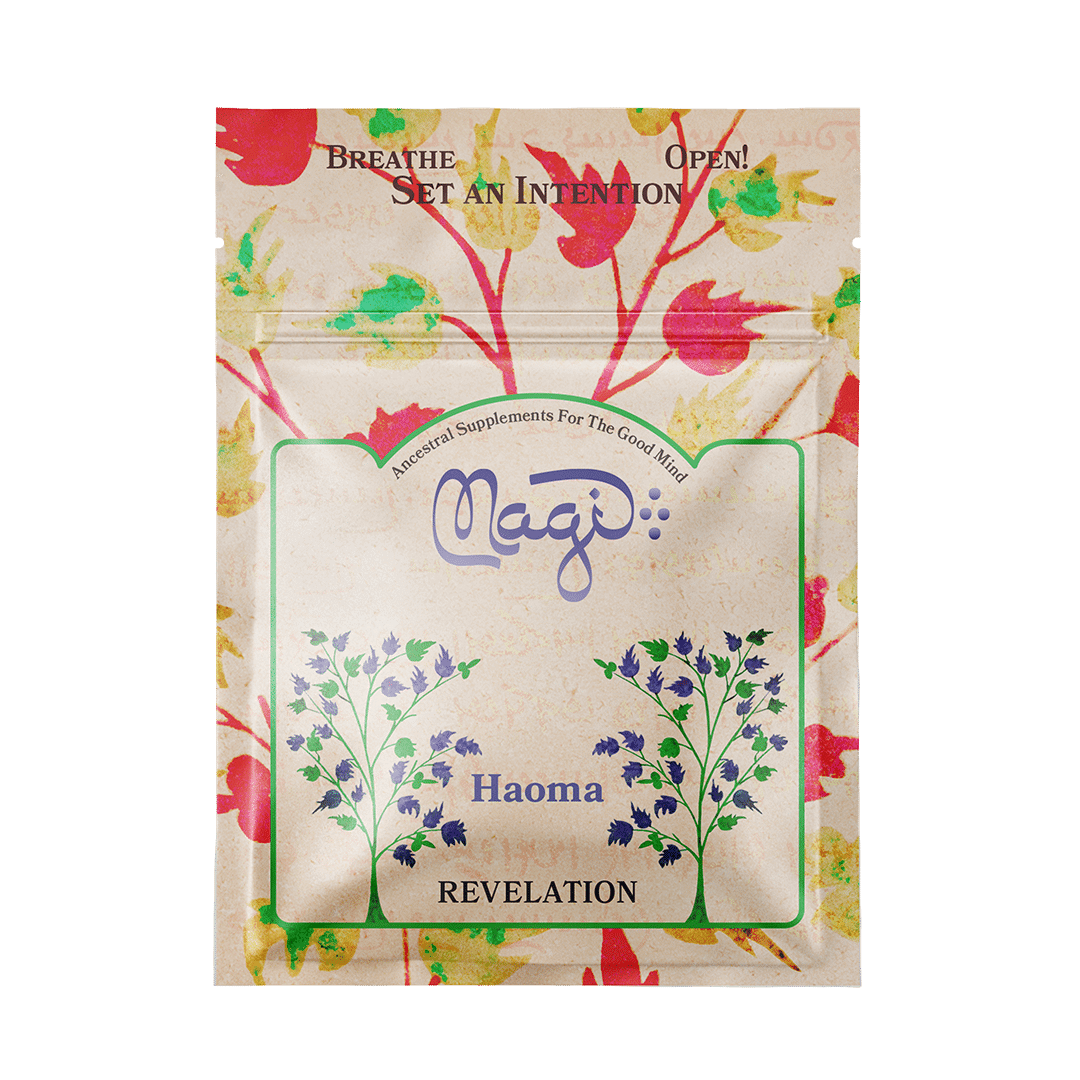
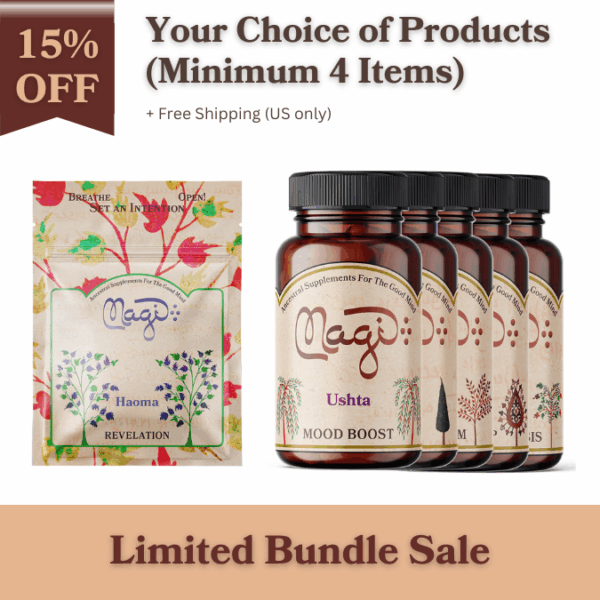
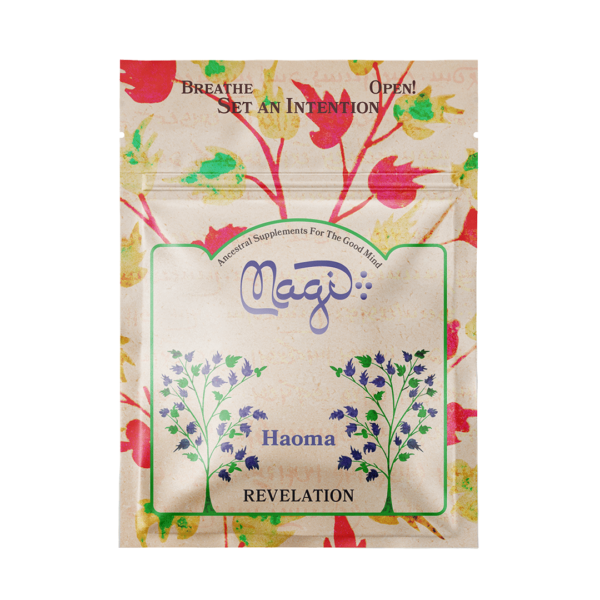
Haoma Revelation Supplement is a plant-based botanical supplement formulated with natural extracts of Espand (Syrian rue or
Peganum harmala), an ancestral plant used by the Zoroastrian priests of ancient Iran in pursuit of otherworldly wisdom and a sublime state of mind — The Good Mind. Haoma is our
Revelation dose: a high dose of beta-carbolines, approximately equivalent to the level found in a standard dose of the traditional Haoma brew.
This extraordinary formulation demands a conscientious and thoughtful approach within the optimal set and setting. Prepare with intention and minimize fermented food intake for 24 hours prior. Choose a serene and familiar environment, sitting or lying down in utmost comfort, with minimal stimulation.
Who Haoma Is For
Haoma is for people who want to work with the
subconscious deliberately — and are willing to prepare for it.
- Inner-work practitioners & oneironauts. For those already working with dreams, journaling, active imagination, or contemplative practice who want direct access to the same material while awake and able to remember it.
- People carrying grief or emotional weight. Loss, unfinished goodbyes, old grievances, things held quietly for years. Grief is not an illness — it is one of the most human things there is, and cultures have always made deliberate space for it. Haoma offers a contained, intentional setting to turn toward that material rather than around it.
- Creators and seekers of insight. The dreaming mind makes associations the waking mind won’t. This is a way to go looking for them on purpose.
- Contemplatives with a serious practice. Best paired with calm meditation — open awareness (Vipassana) or fixed attention — never with physically intense practice.
Haoma is NOT for: first-timers to our line (start with
Stard or
Ushta), anyone unwilling to follow the dietary and drug precautions below, anyone without a free afternoon and a settled environment, or casual use.
Haoma is a wellness supplement, not a medicine. It is not a treatment for any medical condition and is not a substitute for therapy or professional care. If you are in acute distress or under psychiatric care, please work with a qualified professional. Do not use if pregnant or nursing. Consult your physician before use if you have a medical condition or take prescription medication — especially MAOIs, SSRIs/SNRIs, or any serotonergic drug (see the full list below).
These statements have not been evaluated by the Food and Drug Administration. This product is not intended to diagnose, treat, cure, or prevent any disease.
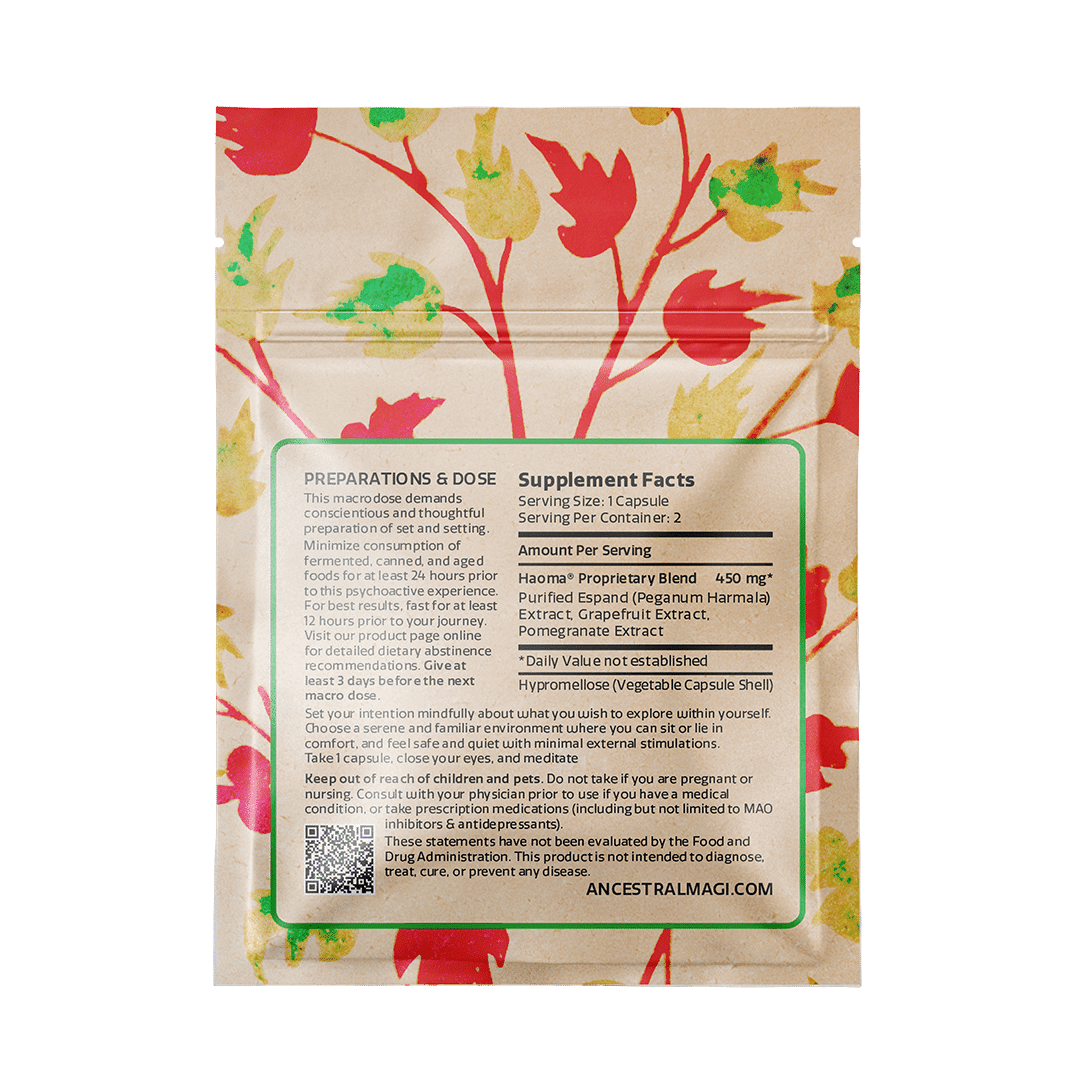
PREPARATION AND DOSE
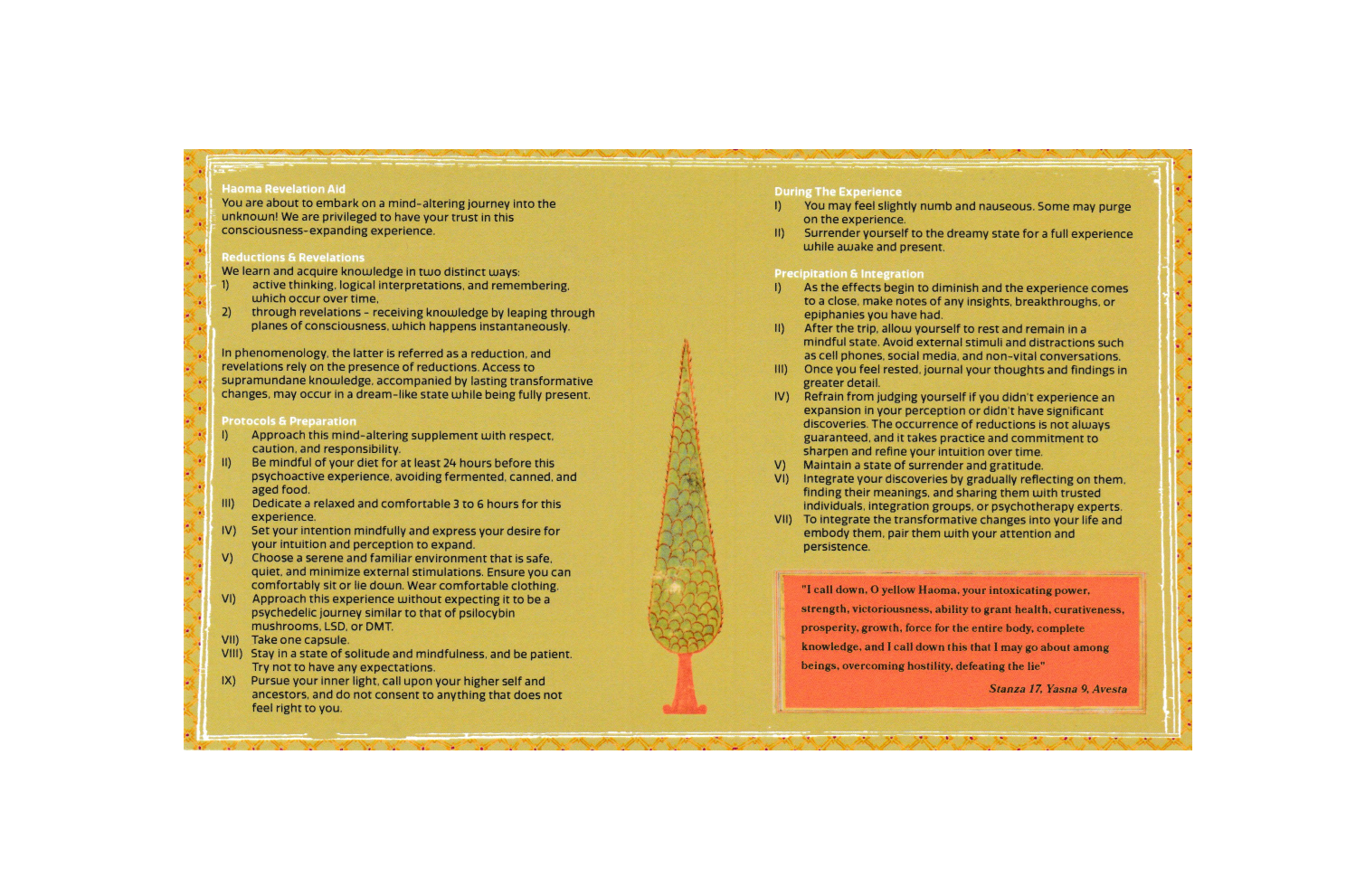
The Revelation dose demands conscientious and thoughtful preparation of mindset and setting.
Before you begin:
- Give yourself the whole afternoon or evening. Do not plan anything after.
- Have a sitter — or at minimum, someone who knows what you are doing and is reachable. The ancestral protocol never had anyone journey alone.
- Minimize consumption of fermented, canned, and aged foods — including cheeses, cured meats, and kombucha — for at least 24 hours prior. See the full list below.
- For best results, fast for at least 12 hours prior.
- Set your intention mindfully about what you wish to discover about yourself.
The session:
Choose a serene and familiar environment where you can sit or lie in comfort, and feel safe and quiet with minimal external stimulation. Take 1 capsule, close your eyes, and begin to meditate in a calm form — such as open awareness (e.g. Vipassana) or fixed attention (e.g. Transcendental Meditation). Avoid physically intensive forms like holotropic breathwork or Zikr.
You should begin to feel your mind spreading and lightening as you go deeper, around
5–15 minutes after dosage. Peak effects arrive around
30–60 minutes, depending on how empty your stomach is and how tranquil your mind is. The main effects begin to dissipate
2–4 hours after dosage, after which you can return to normal waking activities.
Afterward:
- Write down what you find within a day. Insight that isn’t integrated tends to evaporate.
- Do not take Haoma more than once every two weeks. For most people, once a month is the better rhythm — the psychological effects of deep personal insight can be significant, and integration takes time.
Trust the wisdom of our ancestors. Trust yourself, your preparation, and your dedication as you embark on a journey of self-discovery.
Do not exceed the recommended dose. Do not take if you are pregnant or nursing. Consult with your physician before use if you have high blood pressure or a medical condition, or if you take any prescription medications (including but not limited to MAO inhibitors and antidepressants). Do not operate motor vehicles or machinery while under the effects of Haoma Revelation Supplement.
Store in a cool, dry place. Keep out of reach of children.
FOOD & DRUGS TO AVOID
Why this matters — tyramine explained
Tyramine is a naturally occurring amino acid produced in the body that helps regulate blood pressure. It is also found in high concentrations in certain foods — particularly
aged, canned, and fermented foods.
Monoamine oxidase inhibitors (MAOIs) inhibit the breakdown of neurotransmitters such as serotonin and dopamine — and they also inhibit the breakdown of
tyramine, which can present a risk of
tyramine-related hypertension (high blood pressure). Because of this, both modern and ancestral cultures have practiced dietary caution when ingesting MAOIs, including natural MAOIs such as beta-carbolines. This is the same reasoning behind the medical advice to avoid tyramine-rich foods when taking
prescription MAOIs, and behind the traditional preparatory
dieta before a ceremony.
The risk is much lower today than 30 years ago, when food was far higher in tyramine. Still, research suggests tyramine-related hypertension continues to affect roughly
15% of the population. For the other 85%, there is less concern when combining MAOIs with tyramine at levels up to 200–800 mg (equivalent to eating 1 lb of Gouda or 1.5 lbs of mackerel — two of the highest-tyramine foods). But for that 15%, there may be a concern at as little as
10 mg of tyramine (equivalent to 2 oz of ham or 1 oz of cheddar).
Very few in Magi’s community follow a strict MAOI diet and none have reported issues. Regardless, we recommend taking our products either first thing in the morning or last thing in the evening
on an empty stomach — to mitigate this concern and, more importantly, for greater effectiveness. The majority of your body’s neurotransmitters are in the gut, not the brain, so an empty stomach also helps bioavailability.
Because Haoma contains a significantly higher content of beta-carbolines than our mini-dose and microdose products, we recommend avoiding the following tyramine-rich foods for 24 hours before and after.
Foods to avoid — 24 hours before and after
- Aged cheeses — particularly blue cheese, cheddar, Swiss, parmesan, and feta.
- Cured, processed, or fermented meats — dried sausages, pepperoni, hot dogs, bologna, bacon, prosciutto.
- Organ meats — such as aged chicken liver.
- Pickled or fermented vegetables — kimchi, pickles, sauerkraut.
- Fermented soy products — tofu, soy sauce, miso.
- Fermented beverages — canned or bottled beer, craft beer, alcohol, kombucha.
- MSG-containing foods and sauces — fish sauce, teriyaki.
- Dried fruits and vegetables.
- Any canned or bottled foods.
- Yeast extracts — Vegemite, Marmite, sourdough bread.
- Aged meats — particularly red meat.
- Aged fish — smoked salmon, mackerel, cod, sardines.
- Certain beans/legumes — fava and broad beans.
- Nuts, seeds, and nut butters.
Drugs to avoid combining with Haoma
- Antidepressants — SSRIs (fluoxetine, sertraline, escitalopram), SNRIs (venlafaxine, duloxetine), TCAs (clomipramine, imipramine), atypicals (bupropion, mirtazapine, trazodone, vilazodone, vortioxetine).
- Other MAOIs — selegiline, rasagiline, isocarboxazid, tranylcypromine, phenelzine; the antibiotic linezolid; the dye methylene blue.
- Opioids with serotonergic activity — meperidine (pethidine), tramadol, methadone, fentanyl, tapentadol, and dextromethorphan (OTC cough syrup — Coricidin, NyQuil).
- Sympathomimetic stimulants & decongestants — pseudoephedrine, phenylephrine, ephedrine, amphetamine, methylphenidate, modafinil, phentermine, cocaine, cathinones.
- Migraine therapeutics — triptans (sumatriptan, rizatriptan, etc.), ergot alkaloids (ergotamine, dihydroergotamine).
This is not a comprehensive list and does not constitute medical advice in any way. It is best to consult with your doctor.
FAQ
How will I feel after taking Haoma Revelation Supplement?
- Most people report a warm numbness and a relaxing sense of mental spreading within 15 minutes, with some physiological disorientation.
- Peak psychological and emotional effects typically persist 1–2 hours; the lingering relaxing, opening sensation continues 4–6 hours. Physiological effects persist 2–3 hours, after which most people feel reoriented and capable of social interaction or operating motor vehicles again.
Should I meditate on Haoma Revelation Supplement?
- Yes. Haoma is meant to facilitate deep personal exploration and insight, supported by a meditative state of conscious awareness.
- Best suited to serene, calm forms — open awareness like Vipassana or fixed attention like Transcendental Meditation. Not suited to physically intensive forms like holotropic breathwork or Zikr.
Can I take Haoma Revelation Aid daily or weekly?
- No. Haoma should not be taken daily. Do not use more than once every two weeks — and for most people, once a month is the better rhythm. The psychological effects of deep personal insight can be significant and require intentional integration.
Why is it best to take Haoma Revelation Aid on an empty stomach?
- The majority of your body’s neurotransmitters are in the gut, not the brain. Food can interfere with neurotransmitter absorption. The closer your stomach is to empty, the higher the bioavailability.
Is Haoma Revelation Supplement safe?
- Haoma is safe when taken as directed at the recommended dosage, with the dietary and drug precautions above observed.
- Our Haoma® formula is made from purified natural plant extracts of Syrian rue. In addition to their anti-inflammatory and neuroprotective properties, the natural beta-carbolines in Syrian rue function as monoamine oxidase inhibitors (MAOIs) [1], which can raise blood pressure when combined with tyramine-containing foods [2].
- Tyramine levels in food have declined over time thanks to improvements in agriculture, processing and storage. Although tyramine-related hypertension affects only a minority of the population [3], we recommend avoiding tyramine-rich foods when taking Haoma. Taking it on an empty stomach also mitigates the risk of hypertension and nausea.
How does it work?
- Haoma® is a precise high-dose formulation of Syrian-rue-derived beta-carbolines that begin to affect the central nervous system within 20 minutes of ingestion. In preclinical and mechanistic research, the compounds in Haoma® have been studied for their ability to:
- Provide neuroprotective antioxidant effects and help inhibit neurotoxins [4][5]
- Help modulate inflammatory signaling and the growth of inflammatory prostaglandins [7]
- Support neurogenesis by increasing BDNF and hNPC levels [14][15]
- Modulate neuroreceptors such as serotonin, dopamine, acetylcholine, histamine, and imidazoline, which are involved in perception and consciousness [8]
- Modulate the brain’s limbic system, involved in semantic memory and emotional processing, easing the rate of switching between states of fear and security
- At this dose and blend, the Haoma® formula is formulated to support a dream-like state of perception and insight while awake.




 Haoma Revelation Supplement